Showing posts with label self-publishing. Show all posts

Thursday, October 16, 2014

U.L. Harper: A Self-Published Author


BeFunky_inblackness2_bookcover2It’s a pleasure to welcome author U.L. Harper back to Thoughts in Progress. It’s been a few years since his last visit, but he’s here today to talk about being a self-published author.

His latest release is In Blackness: The Reinvention of Man: In Blackness, #2. Here’s a description of it: 
        The aliens have returned and we’ve offered them…our flesh.
        The aliens mysteriously disappeared but not before they murdered thousands in man-made, human slaughterhouses.
        San Pedro has been gutted from the invasion, physically and emotionally. It is a time of deep unrest spurred by a lack of government transparency about the invasion. The aliens must have had human help. Dustin, Lenny, and Saline know their father is part of the conspiracy but before that even matters they have to save themselves.
        If Lenny and Saline want to live they must complete the missions assigned to them by aliens.
        Once on their respective journeys, Lenny meets Michaela, a woman ready to kill for those like her—individuals on the run from a mysterious and homicidal alien. She is visceral and determined to help Lenny, but why she will go to no end to do so will put them in grave danger.
        Saline, on the other hand, teams up with a young boy who is also the only person to see on board the alien ship. What he says about the ship is riveting and frightening even beyond her wildest ideas of it. The very nature of the ship is what could very well change everything.
        Meanwhile, Dustin remains home preparing for San Pedro’s apparent collapse when he discovers something that could either ruin him or help him through this trying time—his father’s secret stash of living, alien flesh. Now Dustin is left with a decision: trust his father and use the alien skin to his advantage or risk falling victim to ensuing barbarism.
        The Reinvention of Man is the second book in the In Blackness Trilogy.


Please join me in giving a warm welcome to U.L. as he talks about the publishing industry and being a self-published author.

I’m a self-published author. There. I said it. For better or worse I did it my way, do it my way, and appreciate my way. But I’m learning, even if I’m being jaded in the process, I’m learning. Some of the things I’ve learned about book publishing might seem obvious to most of you, but to me, not so much.

Let’s get started. 

First off, I’m just going to state the obvious. The book industry is broken. I didn’t want to believe it when I got started. I thought it was all negative hype and that for the true readers and the “real” publishers books were flourishing. I was wrong. My thinking was that I could write some damned good books and the crème would always rise to the top. The truth is, the crème gets old because the industry doesn’t believe in good story-telling; it believes in good story-marketing and if your great story doesn’t seem marketable at the time then why invest in it?
 
That seems to be the general outlook from publishing. It means there are some bad books out there that no one really wants to read, getting pushed really hard. Thanks industry, for killing books…slowly. They complain self-publishing is flooding the market. No. Publishers have been flooding the market with crap for decades. It’s one reason why so many authors figure they can do it themselves. They’re like, I can put out crap like that. Sounds kind of rude but that doesn’t make it any less true.

It sounds bitter but that’s one thing that I learned.

So what I had to do was adjust. I had to do more than just write a damned good book, and I couldn’t wait. So this is what I did. I edited, big time. My newest novel, IN BLACKNESS, I scaled down from about 80,000 words to about 62,000 words. Some people accused me of lopping off story, which I did, and others accused me of skimping out on the characters, which I didn’t.
 
Every character still grows all the way through the novel, it’s just that now I’ll talk about their parents, not their grandparents as well. They no longer look in the mirror in retrospect of something. They don’t ponder good and evil or make quips at the audience. I don’t dwell on scenery. I simply set the scene and move on. 

Now I have less of a focus on being literary and more of a focus on having a distinct tone, clear movement and proper yet interesting timing. Yes, it makes for a much shorter story. The question is why do I need a shorter story? Here is why? It’s cheaper to proofread a 250 page novel compared to a 400 page novel, in a nutshell. It’s also cheaper to print and mail. Someone might argue to simply tell the story and that’s it. How it turns out is how it turns out. People that is hogwash. 

You write the story, and you have to be willing to do what’s needed to make that particular story the best it can be, rather than what you think it should be. It’s not about you. It’s about the story, and believe it or not, it’s about the reader. You can’t please everybody, but why only please yourself? Be happy with what you create but you have to have the audience in mind.

Yeah, I sound negative. I’m not though. It’s pragmatic. Put it this way. My first novel, THE FLESH STATUE, in my opinion, will probably always be my best work. Like you might guess, it’s the one with most of my personality in it. I put everything I had into it. Love it to death. With that said, it’s the least impactful of anything I have out there. Why? Nobody gets it. And I never found a way to market it. The timing is messed up in it; there is too much information. In other words, it needs an editor. It will get it one day. Right now, however, I don’t want to touch what I consider is an epic piece of badly edited, hardly proofread, amazing slab of literature. Love it. 

Okay, I’m not going to continue blabbering away. You and I have things to do. I’m just going to add this last little bit. Writing groups. There are different ways to look at them. Here is my view. Use them. Most of the time they have no idea what they’re talking about. It’s just that if you’re wondering what the reader might be thinking, then their opinions are gold. So what if you’re group does not represent your target audience. If they’re the audience you have then they’re what you have. Whatever they say is true, at least to them.
 
It only takes one great comment to give you that ah ha moment. For me it was in college. I remember the comment to this day, decades later. My professor said that not only was the reader and characters surprised at the events taking place but so was the author. I loved that effect, and I knew how I did it and I could duplicate it. To this day, I use the technique. Everything is always in front of the reader. I try to hide nothing. At the same time, what the character or characters do with the information kind of hits you in the face. It’s the illusion that the characters are jumping off the page on their own. The point is I got it from a writing group. Through the semester it was the only thing I remembered. The one thing.

Anyway hit me up on Twitter if you get a chance or email me. I’ll be around. Thanks for stopping by.
 
U.L., thanks for joining us today and sharing your insight into the publishing industry and being a self-published author. 

Now let me share a bit of background on U.L. in his own words.

First off I write books. I write science fiction and fantasy based in reality. Think Vonnegut meets McCarthy. My stories are never straight forward. My novels are basically devoid of romance. Love, yes. Romance, no. I don’t believe in romance, a lie a man tells to a woman’s reality. I have no business writing it. One thing all my novels have is that they take place in the immediate future or a slightly facetious present. If that doesn’t make sense then, damn. Leave me a comment somewhere, I guess.


I started writing when every other author starting writing—at about 12 years old, with a pencil and a spiral bound notebook. Had no idea I was writing stories. On any level, I finished my first novel at about 23 years old. It was a handwritten manuscript and all of it was in pencil. It was called The Nothing Bottom and nobody will ever read it, because I lost it right after I wrote it. My next novel I lost on a floppy disc. It simply disappeared from off the disc. I had to reimagine the entire thing. The current version is called IN BLACKNESS. Anyone willing can purchase it from wherever books are sold. It’s a good time. If I were to choose between that book and Disneyland I’d just kick Mickey in face and then go read my book. 


I’m a native to Long Beach, California and attended Long Beach Poly High School and then Cypress Community College where I became Editor In Chief of the Cypress Chronicle (in the good ol' days).


Now I run after-school programs in Long Beach. Over three hundred students attend my programs. Nope, this wasn’t my first choice for work. My first choice was to be a professional tetherball player. Then I wanted to be a journalist. Actually, I wound up succeeding on a small level with the journalist thing. It’s just that $8 an hour will have you finding another job pretty quick. That bicycle wasn’t working for me, wasn’t getting me anywhere so to speak. That paper closed anyway. 

For more information on U.L., check out his website and he’s active on Goodreads. You can also find him on Twitter and contact him at ulharper1@gmail.com.

Thanks for stopping by today during U.L.’s visit. What are your thoughts on the publishing industry at this stage? What are your thoughts on self-publishing?

*This post contains affiliate links.

Wednesday, April 24, 2013

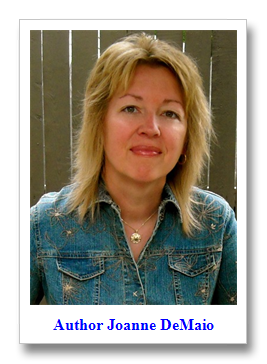
Author Joanne DeMaio: Blue Jeans and Coffee Beans


It’s a pleasure to welcome the multi-talented, award-winning author Joanne DeMaio here today to talk about her second book, BLUE JEANS AND COFFEE BEANS.

I meet Joanne early in my blogging through her blog, Whole Latté Life. Who could resist checking out a blog title like that? She has since changed to her website and has gone the path many authors are choosing - self publishing. By doing so, she has given readers the delightful WHOLE LATTE LIFE: A NOVEL and now BLUE JEANS AND COFFEE BEANS.

Here’s a brief synopsis of BLUE JEANS AND COFFEE BEANS:

    What do a denim designer, a cherished New England beach and a dusty reel of an old home movie have in common? All get the story brewing in Blue Jeans and Coffee Beans.
    Returning again to the sandy shores of Long Island Sound, the story follows a group of beach friends reuniting after a decade apart. But can these friends ever be who they were to each other one long-ago summer? Now one of this beach circle is dead; another unemployed and struggling in a tenuous marriage; another regretting a fateful decision; while one is missing a mother, ever seeking a connection she longs for.
    To the backdrop of shingled cottages and a boarded-up beach hangout, to the soundtrack of whispering lagoon grasses and a vintage jukebox, Blue Jeans and Coffee Beans asks if we can really design our own lives or if our fate lies somewhere in the stars.

Joanne has graciously answered some questions for me about her writing and her latest release.

Mason - What were the advantages and disadvantages to writing a second book?

Joanne:
Writing is what I do; it’s a part of my every day. So I can honestly say that there were no disadvantages to writing my second book. It was a natural progression. When I set out on the publishing journey, I considered it my career and planned ahead of time for a schedule of upcoming book releases. You often hear the best advice to new authors is to write that next book … it’s hard to understand the reasoning until you do it. But I’ve found that my readers are anxious for the next story, and the next. So the advantage to publishing a second book is that it opens new doors, while growing an audience.


Mason - Can you tell us some things about your lead character, Maris Carrington, that can’t be found in the book?

Joanne:
I wanted BLUE JEANS AND COFFEE BEANS to be closely tied-in with themes of the sea. What readers might not realize is the meaning behind Maris’ name. It’s fully connected to the sea, and here’s how. Her first name Maris is derived from Latin, meaning “of the sea.” Her last name Carrington is actually the name of a cottage-lined beach road from the little beach that I base Stony Point on (Point O’ Woods in Connecticut).


Mason - How did the title, BLUE JEANS AND COFFEE BEANS, come about?

Joanne:
It was a very organic process. I knew from the beginning that my main character would work with denim, as I see blue jeans as 9781479262779_p0_v1_s260x420being a symbol for the casual beach life. At the same time, I love bringing coffee to my stories. Some of the best talks happen over a fresh cup of java. Think of all the lattes you've enjoyed with friends, how much life you've mulled over in a local coffee shop or in a cottage kitchen with a fresh-brewed pot. Coffee connects women, life and our stories. After much brainstorming with coffee and denim terms, and many notebook pages filled, I kept coming back to BLUE JEANS AND COFFEE BEANS; it spoke to me.

 
Mason - The cover of BLUE JEANS AND COFFEE BEANS looks so relaxing and inviting. Did you design it or help in the design?

Joanne:
Thanks so much, I’m glad it draws you. Behind the scenes of production, I work very closely with my daughter Mary. Together we designed everything you see on the cover from selecting the beach image to the typography. We knew from the get-go that the story would best be captured with a seaside visual and had several stock photos in mind, but fell in love with this one. My publishing team fine-tuned the original photo to further connect it with the title. I love being hands-on with the cover design for all my books, as it is the readers’ first look at the story.


Mason - Being a published author, what has been the biggest surprise (good or bad) with the entire publishing process?

Joanne:
There have been several surprises … receiving thoughtful Facebook messages and emails from readers telling me how touched they were by my work, learning that my books are in libraries from San Francisco to Brooklyn to New Zealand. It’s surprising how far a story travels.

But the biggest surprise came last June, when my debut novel WHOLE LATTE LIFE was awarded First Place in the 2012 Discovery Awards at Book Expo America. As a new author, it was as thrilling as it was validating to every choice I’ve made along the way.

Mason - What can readers look forward to next from you?

Joanne:
A new novel set in WHOLE LATTE LIFE’s fictional town of Addison, Connecticut, where one sunny spring morning, lives are forever changed by an unexpected tragedy. 


Thanks for hosting me at Thoughts In Progress, Mason. I enjoyed chatting with you and your readers today … Coffee cheers.  ~ Joanne

Joanne, thank you for visiting with us and sharing this behind-the-scenes look at BLUE JEANS AND COFFEE BEANS. There is something about the cover and the title that just draws you to pick up the book. You know it’s going to be a fun read (which, by the way, it really is…I’ll share my review next week).

Now a bit of background on Joanne for those who haven’t meet her yet. She is the award-winning author of BLUE JEANS AND COFFEE BEANS and the bestselling novel WHOLE LATTE LIFE, which won First Place in the 2012 Discovery Awards and was named a Kirkus Reviews Critics' Pick. It has also been featured in USA Today, The Huffington Post and other outlets. 

Joanne lives with her family in Connecticut and is currently at work on her next book. She enjoys connecting with readers on Facebook and her website.

Everyone, thank you so much for stopping by today. Do you find a story with a beach-theme makes you feel like you’re at the beach relaxing with a good book?

Friday, December 7, 2012

Author David LeRoy: The Siren of Paris Tour

 
It’s my pleasure to be a participant in the promotional tour for author David LeRoy’s debut novel, THE SIREN OF PARIS, which explores the French Resistance and other events during World War II.

Here is a synopsis of David’s novel:
Born in Paris and raised in the United States, 21-year-old Marc Tolbert enjoys the advantages of being born to a wealthy, well-connected family. Reaching a turning point in his life, he decides to abandon his plans of going to medical school and study art in Paris. In 1939, he boards a ship and heads to France, blissfully unaware that Europe -- along with the rest of the world -- is on the brink of an especially devastating war.


When he arrives at l'École Nationale Supérieure des Beaux Arts, more ominous signs surface. There are windows covered with tape, sandbags shielding the fronts of important buildings, whispers of Parisian children leaving the city, and gas masks being distributed. Distracted by a blossoming love affair, Marc isn't too worried about his future, and he certainly doesn't expect a Nazi invasion of France.

Marc has a long journey ahead of him. He witnesses, first-hand, the fall of Paris and the departure of the French government. Employed by an ambassador, he visits heads of state, including the horribly obese gray-haired Mussolini and the charismatic Hitler. He witnesses the effects of the tightening vise of occupation, first-hand, as he tries to escape the country. He also participates in the French resistance, spends time in prison camps, and sees the liberation of the concentration camps. During his struggles, he is reunited with the woman he loves, Marie, who speaks passionately of working with the resistance. Is she working for freedom, or is she not to be trusted?

David has graciously answered some questions for me about his book and his writing.

Mason - If you had to write this book over, would you do anything differently - content in the book, your writing schedule, the way you researched it, etc.?  

David - I have recently received very frank feedback, from an industry insider, that the story needed to be changed for more mass-market appeal. I do not have long descriptive scenes of Paris streets, I lack weather details, and they wanted Marc to rescue Marie from her involvement with the Gestapo, rather than becoming her victim. The book stands in strong contrast to other novels of Paris during this time. 

There are three things I would do differently. In the basement scene on June 3rd when Paris is bombed, I would show the reader that Marc and the embassy staff are afraid of getting hit by bombs and drowning in wine, because Ambassador Bullitt had a collection of 18,000 bottles of wine in that building. The second thing I would change, and I am seriously considering doing this in a 2nd edition, is to reveal the identity of the mysterious German agent Marie takes under her guidance and teaches the fine art of entrapment of Resistance members, along with emotional and mental torture. This mysterious German agent is Klaus Barbie. I intentionally hid this in the book, however some people have figured it out. If you read that scene closely, it is clear that Marie is teaching this agent her techniques; he is later transferred to Paris.  The idea that Marc could save Marie from the Gestapo is very romantic, but not at all realistic. Klaus Barbie is not well known today, and his trial was over 25 years ago but he was an amazing monster. In this book, he is Marie’s student, not the other way around. 

 
Third, I am going to change the cover. It will be a crest of three Fleur de lis of crushed egg shell, one for ghosts of the past, one for prayers, and one for regrets, bound by a single gold ring representing Marc’s engagement to Marie. This is woven into the first chapter of the book. I think the current cover gives readers the idea that this is a war romance, or a thriller, instead of a serious historical novel. At the time the cover seemed to capture the story, but now I wonder what I was thinking when I chose it.  

I would not change the flashbacks in the second part of the story, because every step in Marc’s spiritual journey is carefully considered. Some have suggested cutting some of these characters as if they were just fillers. 

Mason - Did you find any fascinating tidbits of information during your research that you couldn’t use in your book?
 
David - Tons and some will be explored in the book that follows this one. One of the most unusual facts was that Winston Churchill was crossing the channel in a pink airplane, in German controlled airspace, as Paris fell. Because I use third person limited perspective in the book, I do not dive into much exposition going beyond Marc’s point of view. However, when I was close to completing the story, I discovered that in May of 1944 the German Police had posted a job announcement for undercover agents to work, in Paris, against the resistance. Over 6,000 applied for the job. For Marc that makes little difference, because he is already in the hands of the most experienced one of all. But for most in the resistance movement, which included many teenagers, this meant death, usually in the parlor room of 180 Rue de la Pompe. Some historians have questioned the size and scope of the resistance movement, but I think they fail to account for the high number who didn’t survive long enough to be counted after the war.  

Mason - Why write this book? What made this story so compelling to you that you had to tell it?
 
David - I faced a decision, early on, about what kind of story I would write. One would be more along the lines of the typical Siren of Paris by David LeroyWorld War II novel, full of intrigue, spying, and of course the victorious hero in the end. But all the people I read about were not exactly intact. They were haunted by the past and had experienced terrible things, especially betrayal on a very personal level, which scarred them for life. When I discovered that even to this day, survivors, and families of the victims of the RMS Lancastria have not been recognized, or even had the ship declared a war grave, I decided I had to explore betrayal and overcoming survivor’s guilt because it is still real to this day. 

The people who read the book and are the most moved by it have been relatives and children of French Resistance members, because they finally understand why their loved ones never talked about the war and never bragged about their victories. Marc is not a typical hero in the sense of our modern novels, but more of a wounded healer. Through the point of view of his mystical consciousness, the reader experiences a glimpse of hope that, one day, there is release from this war that took an estimated 69 million lives and promise of eternal peace. The inspiration for this unique structure comes from the Egyptian Book of the Dead, which is the story of the soul Ani traveling through the underworld until he reaches the most sacred space, eternal peace. This transforms the historical characters in this novel into a pantheon of both demons and gods. 
 
Mason - Is there any advice you’ve been given that you pass on to writers just beginning?  


David - Study various kinds of story and plot structure. I know that screenplay books are about writing screenplays, but the tools they teach about crafting a story are valuable.
 
Mason - With the book’s release, as you look back what was the biggest surprise that occurred in writing the story?  

David - THE SIREN OF PARIS is nowhere near a bestseller. It is not the number of people who read it, but who reads it that shocks me the most. I have had emails from people with relatives who were in the Paris resistance. Recently, there has been attention, in England, to details in the book about the RMS Lancastria. I do not cover the ultimate fate of Marie in this book, and that is not a mistake. However, some are now asking if this person is alive, and how do I know these details because she would be 92 years old, and a wanted war criminal.
 
Mason - What can readers look forward to next from you?
 
David - I have several projects going, but I plan to release a novella titled THE FLOWER OF CHAMULA in 2013. It is more of a character driven novel; it explores overcoming terminal illness and how it can prevent someone from living fully in the present. My fascination with the mystical and spiritual side of life will be evident in this work. It is set in San Cristobel de la Casa Mexico, in the Chiapas Mountains very close to one of the few places where the Catholic Church has been kicked out completely and replaced with a local form of Shamanism. Photography is not allowed, the floor of the church is covered in pine needles, the air is thick with the smoke of copal, and the veil is thin between the worlds.  
Siren of Paris Header
David, thank you for joining us today and sharing these details about your book. I had to laugh when I read about Winston Churchill in the pink airplane. There has to be a story there. Smile

Now let me share a bit of background about David. A native of California, David received a BA in Philosophy and Religion at Point Loma Nazarene College in San Diego. After returning from a European arts study program, he became interested in the history behind the French Resistance during World War Two. Writing fiction has become his latest way to explore philosophical, moral and emotional issues of life. THE SIREN OF PARIS is his first novel. 

For more information on David and his writing, visit him at http://www.thesirenofparis.com/.

Here is what one reviewer has to say about THE SIREN OF PARIS“This self-published novel really exhibits the amount of time and effort that its author took with his research. Mr. LeRoy takes his readers through the streets of Paris and shows the way the Parisian people were ignorant of the true toll of the war before it rolled down their own streets. He also uses many events of the time period, some that are well-known and some that are less known. I think even readers who are fond of World War II novels will learn about the underground resistance in Paris and the wartime tragedy of the RMS Lancastria.”

Here’s a book trailer for THE SIREN OF PARIS.


Thanks everyone for stopping by today. Do you enjoy stories based in fact and set during World War II? Is Paris one of the cities you love to read about no matter the era?

Friday, May 18, 2012

The Inexperienced Need Not Apply


Did you work hard to get the job you have or were you just lucky being at the right place at the right time?

filling-out-applicationLooking at online job descriptions this week I was struck by the Catch-22 when applying for a job. You can’t get a job without experience and you can’t get experience without a job. Some companies will make allowances for the lack of experience, while others are very strict.

That got me to thinking about authors - those established and those just beginning.

As readers we can sometimes be a bit strict about what we expect from new authors. We can expect too much of them and fail to give them a second chance if they don’t meet our high expectations the first time around. While there are certain things we should expect, all new authors won’t be flawless their first time out. It takes time for some to find their rhythm and that little niche that transforms them into award-winning bestsellers.

I’ve even read new series by well-established bestselling authors that were a bit slow or the story didn’t flow as smoothly as possible. But 9 out of 10 times, with the second installment they had the kinks worked out and things fell into place.

With the ever-increasing new ways writers have available to publish their work, more and more inexperienced authors are in the marketplace. From a reader’s viewpoint this is a plus as it means more books to read. We just have to remember that all the works may not be perfect. Keep in mind you have to write to become experienced.

There was a time when most people wouldn’t even pick up a book that wasn’t printed by a major publishing company. Those writing for the ‘other’ companies weren’t even considered authors. Times have changed and that is no longer the case. Many well-established authors are now deciding to publish themselves.

This week I read a post - Let freedom ring: Indie publishing is becoming a more and more attractive alternative - by Terri Giuliano Long that gives great insight into this. The self publishing taboo is fading fast.

When searching for a new book to read, the author’s experience or lack of shouldn’t be a major factor. The plot and how the characters are developed, that should be an issue. If the story grabs you and draws you, that should be a factor. But remember to also look for potential if there’s a few flaws along the way.

As readers we are well blessed by the vast array of material that is offered from established authors, as well as just beginning authors. Are you willing to try a book by an inexperienced author? What has been you experience with both types of writers? Do you ever consider you might be reading works by the next great Hemingway when you try a new author that little is known about?

Thanks for reading my thoughts today. Have a great Friday and a wonderful weekend. Please stop in tomorrow for a book feature by a ‘new-to-me’ author.

Monday, April 9, 2012

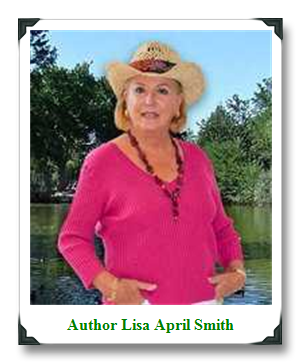
Author Lisa April Smith Talks About Self-Publishing


As more and more writers turn to self-publishing, readers have an ever growing list of new books to enjoy and new authors to follow. 

I’m delighted to welcome self-publish author, Lisa April Smith, here today to talk about her latest release, EXCEEDING EXPECTATIONS, and what made her decide to self-publish. She’s stopping by as part of her Pump Up Your Book Virtual Book Tour.
 
Thanks to Lisa and the good folks at Pump Up Your Book, I have a copy of EXCEEDING EXPECTATIONS to giveaway to 1 lucky visitor who comments on this post by 8 p.m. (EST) on Monday, April 16. Now, here’s Lisa.

I often hear from fans who start by praising my writing before politely asking the hard question, “What made you decide to self-publish?” 

I am happy to explain. Some aspiring authors never find an agent willing to read their manuscripts, let alone represent them. I’ve had three. I won’t bore you with the sorry details of near-miss sales, including a full year spent doing rewrites for a senior editor at Putnam Penguin, who was fired in a downturn. 

Exceeding ExpectationsMy third and last agent belonged to one of the largest and most prestigious literary agencies in the world and represented a long list of famous authors. The day I received word that she loved EXCEEDING EXPECTATIONS and my writing, and wanted to represent me, I literally danced around the room. Unfortunately, in 5 years under contract she sold nothing of mine. I don’t blame her for trying to stay afloat by concentrating all her time and energy on her A-list authors. The stories she shared, of desperate authors and long-negotiated contracts not signed at the last minute, are heartbreaking.  

As readers, you probably know that publishing isn’t the business it was 20 years ago. It isn’t the business it was 3 years ago. It’s changing so fast the principals don’t know how to react. At one time, recently demised Borders had 1,200 stores. Consider the impact of closing 1,200 major retail outlets on publishers. It’s been attacked on all sides, not only by the Great Recession but also by the continuing growth of its major competitor, Amazon. Perhaps the greatest blow came from eBooks, coupled with the unprecedented success of self-published eBooks. 

In March, 2011, almost 1 out of 3 of Amazon’s 50 top selling eBooks sold for less than $3.99 – the overwhelming percentage self-published. Apparently, price matters to buyers. With the ability to read the first 30 pages free before buying, and an easy return policy, readers no longer automatically dismiss self-published authors. 

That movement continues growing. I didn’t need a crystal ball. April 1, 2011 I severed my contract with my agent. July 1st, 2011, I joined the eBook revolution with DANGEROUS LIES. EXCEEDING EXPECTATIONS officially launched Jan. 1, 2012. 

Lisa, thanks for guest blogging today and giving us an inside look at why authors self-publish. Being able to self-publish does have its advantages for both the author and the reader.

Here’s a little background on Lisa. She lives with her husband, He-who-wishes-to-remain-anonymous, in Eternal Playland, Florida, a delightful spot just off I-95. Lisa describes Eternal Playland as: “a little piece of level heaven with occasional dampness, where the bugs are plentiful but respectful, and even the smallest strip mall contains at least one pizza place and a nail salon.”

Before discovering a passion for writing, Lisa sold plumbing and heating, antiques, taught ballroom dancing, tutored, modeled, designed software and managed projects for IBM and returned to college multiple times to study anthropology, sociology and computer science, in which she holds degrees, as well as psychology, archeology, literature, history and art. Combine those widely diverse interests with a love of travel and a gift for writing page-turners and it’s easy to understand one reviewer’s unbridled praise for EXCEEDING EXPECTATIONS, “She (Ms. Smith) has a brilliance for conveying characters, and the intellectual capacity to place them in historical settings that sparkle with glamorous detail. . . that make it fun to read . . .” 

But it takes much more than lush settings, an eye for detail and a love of history to write a page-turner. Here’s what another reviewer said about EXCEEDING EXPECTATIONS: “Lisa April Smith . . . has woven an intriguingly rich tapestry of delightful well-developed characters into a perfectly balanced plot bursting with riveting mystery, crimes of the petty and the horrible sort, suspenseful twists, and romantic tension complete with love scenes that sizzle and pop.”

For more about the author, her books, and upcoming projects visit her website at http://www.LisaAprilSmith.com

Here’s a synopsis of EXCEEDING EXPECTATIONS: It’s 1961 and Palm Beach socialite, irresistible rascal and devoted father Jack Morgan encounters genuine danger while staging his suicide to shield his beloved daughters from disgrace. Next, meet his daughter Charlotte (Charlie), an over-indulged 23 year-old struggling to cope with the traumatizing loss of her beloved father, her sister’s resulting mental breakdown and the discovery that she’s suddenly penniless. Fortunately Raul, an admiring young attorney, appears to offer assistance. As terrified as she is about daily survival, Charlie soon realizes that she has to learn what drove her father to kill himself. With Raul’s much needed ego-bolstering, the drive of necessity and unforeseen determination, Charlie finds a practical use for her annoyingly lean 5’ 11” frame. In time, this career finances her hard-wrought independence, her sister’s costly treatment and an emotional eye-opening journey to Paris.

Jumping back in time to romantic pre-WWII Paris readers meet young Alan Fitzpatrick – aka Jack Morgan – lack-luster artist, expert lover, irresistible rascal, and the bewitching girl who will become the mother of his children. Not even Charlie’s relentless detective work will uncover all Jack’s secrets, but in a fireworks of surprise endings, she discovers all that she needs to know and more:  disturbing truths about her father, hew own unique talent, crimes great and small and a diabolical villain.

As a reader, do you read more books by self-published authors than you once did? As a writer, have you tried self-publishing or are you considering it? Be sure to leave your email address with your comment, if it’s not included in your profile for a chance to win a copy of EXCEEDING EXPECTATIONS. Thanks so much for stopping by.

Exceeding-Expectations