Showing posts with label #comingofage. Show all posts

Friday, July 9, 2021

Catwalk (+ Giveaway)


Catwalk
By Nicole Gabor
Publication date: July 6th, 2021
Genres: Coming of Age, Young Adult

Eighteen-year-old, shy, suburban aspiring model Cat Watson suddenly has it all as the New York fashion world’s new “It” girl and she thinks she has everything she ever dreamed of—until she realizes be careful what you wish for, you just might get it.

Leaving her good-girl image behind, Cat quickly learns things aren’t always what they seem on the catwalk, and she’s faced with a decision that will change her life forever.

WILMINGTON, Delaware, May 12, 2021

When 18-year-old Catherine Watson disobeys her parents and ditches her Ivy-league acceptance to start fresh as an aspiring model in New York City, a chance encounter with fashion world bigwigs gives her a world-class agent plus a boyfriend she only dreamed about. But as she navigates the fickle world of modeling, she realizes that to get ahead, she’ll have to leave herself behind—but is it worth it? Catwalk is an expertly written tale of first love, coming of age, and high-fashion, from award-winning author and editor Nicole Gabor, inspired by her own experiences as a runway model.

In her suburban hometown, Catherine had what most would consider a charmed life: a 4.0 GPA, a good-guy boyfriend who had his whole life planned out down to the two kids, two dogs, two-car garage—and it scared her to death. She wasn’t ready to follow a traditional path to a paint-by-numbers existence. She longed for adventure, for a life less…ordinary. When Catherine moves away to pursue her modeling dream in New York City and moves in with Jon-Michelle “Jonnie” who tackles the newly-named “Cat” as “her next project,” she revels in her newfound career, thinking “this is what it’s like to be young and beautiful in the greatest city in the world.”

“At that moment, it hit me. I was a mere mortal in a room full of demigods: actors, actresses, bygone legends of the stage and screen; men and women who had traipsed down red carpets all of their lives, whom the rest of the country, no, the world, had pined for, had paid to know the secrets of. Here I was standing among them, cavorting with twenty-first century royals.”

Cat meets Seth, a beautiful and kind but troubled New York scenester, the son of a ‘70s fashion model icon who fatally overdosed during her prime, and she feels strangely protective. She wants to save him like he saved her on her first night out on the town in New York City’s gritty yet swanky meatpacking district club scene.

When Cat is “discovered” by the one and only Philippe Borghetta, the hottest fashion designer in the pages of Vogue magazine, she thinks she has it all. Her life is thrust into an alternate universe, where star-studded cocktail parties, casting calls, go-sees, and nightclub openings revolve around her like constellations. She tries to play the part. Her former self, “Catherine,” was now a shadow of who she was and what she was becoming.

Cat thinks she’s finally gotten what she wanted all along—a chance to start over, a redo, a refresh. But as the lines blur between who she once was and who she wants to be, she’s reminded of her mother’s words, “Sometimes the things that are most worth fighting for are the things you already have.” Cat finds she has to make a decision that will change her life—and possibly the modeling world—forever.

Drawing on her own experiences in the fast-paced fashion model industry, former model and author of more than twenty children’s books, Nicole Gabor masterfully weaves a timeless story of self-discovery, coming of age, and the heartache of first loves. Catwalk is her debut young adult/new adult novel, available July 2021 wherever books are sold.

Goodreads / Amazon

EXCERPT:

My parents stared at me from across the kitchen table, stunned. They looked as though I’d just told them that our 12-year-old lab, Holly, had died.

I watched the wrinkles on my mother’s forehead get deeper and darker, and it seemed like she was aging right before my eyes. Was her hair turning gray? I once heard that former First Lady Barbara Bush’s hair turned gray overnight from the shock and grief of losing her baby daughter.

But I was not dead, or even dying. I was alive, and in the flesh. And I had just told my parents that I, Catherine Watson, their only daughter — the one with the 4.0 grade point average who my stay-at-home mother hoped would become a successful career woman, and my father secretly wished would follow in his footsteps as a lawyer — was not going to college after all.

I was, in fact, moving to New York City. To be a fashion model.

As I spoke, my letter of decline to the University of Pennsylvania’s College of Arts and Sciences was signed, sealed, and on its way to the admissions office. My mother cried and said that I was breaking her heart. My father yelled and said that I was ruining my life. Part of me feared they were right. To be honest, I couldn’t believe I’d actually gotten up the nerve to send that letter. I’d always listened to my parents, did the “right” thing. Never cut class. Been teacher’s pet. Made curfew. But I was sick of following the rules.

With my high school graduation just behind me, the idea of more school — only to be followed by an office job that would imprison me within four gray walls — was something that I couldn’t succumb to yet, if ever.

I was ready for adventure, for excitement, for a life less … ordinary. And I had a hunch that plenty of people stuck to the safe roads, so maybe, just maybe, I could make it on a path where everyone else wasn’t taking up so much space.

Of course, it did seem an odd choice. I’d always been so ashamed of the attributes that could, quite possibly, make me a model. Lanky and lean at 6 feet tall, I had a way of sticking out in the hallways, towering over most of the female (and many of the male) teachers. Growing up, I’d tried everything I could to blend in, to bulk up, to deny my stature: I drank milkshakes. Dressed in layers. Only wore flats. Avoided stretching in gym glass. Never stood next to the short boys in line.

But then, one day, something happened. My mother took me to Victoria’s Secret in Philadelphia to pick out my first fancy grown-up bra for my birthday. I was eying the “extreme lift” padded pushups (which I was sure would jumpstart my love life), when a woman tapped me on the shoulder and asked if I wanted to be a model. Just like that.

“She just turned 14,” my mother said, looking a bit puzzled and slightly irritated. “I think she’s a little young, don’t you?”

“She’s perfect,” said the older woman, who was in her sixties and dressed far more fashionably than my 45-year-old mother.

She couldn’t possibly be talking about me, I thought. Is this some sort of practical joke? A sick, twisted joke? I looked around expecting to see some mean girls from school, but the place was virtually empty. I turned back around, feeling my face flush.

“You … you think I could model?” I stammered.

“I think you’re wasting your talent if you don’t,” she said. “Here’s my card. Call me when your mother changes her mind.”

But she never did. And neither did my father. Despite all my begging and pleading. My parents said that high school was more important, that getting into college was more important. That anything was more important than “aspiring toward such a frivolous pursuit.”

So I did what any girl in my situation would do. I stomped up the stairs, slammed the door, and screamed and cried into my pillow. But for the first time in my life, I felt like something special. Someone special. And my parents were not going to take that away from me.

Meet the Author: Nicole Gabor

Nicole is a published author of more than 20 children's picture books and an award-winning health writer and editor.

Her debut young adult/new adult fiction novel Catwalk is inspired by her experiences living and working in New York City as a model. She's also a freelance writer at Highlights for Children and a senior editor at KidsHealth.org, the web's most-visited site for children's health.

She lives in Delaware with her husband, three children, and their Goldendoodle named Ginger. Learn more at www.nicolegabor.com

Website / Goodreads / Facebook Group / Twitter / Amazon / Instagram

Thanks so much for stopping by today. Do you think the live of a model is all glam and fun or do you think there are problems and stress mixed with the fun?

GIVEAWAY!
a Rafflecopter giveaway

Hosted by:
XBTBanner1

S

Tuesday, June 9, 2020

Belladonna by Anbara Salam


Today is one of those days where I get to share with you a “new-to-me” author and her latest release, BELLADONNA, which comes out today.

* Hardcover: 336 pages
* Publisher: Berkley (June 9, 2020)
* Language: English
* ISBN-10: 0593099346
* ISBN-13: 978-0593099346

A hypnotizing coming-of-age novel set in 1950s Italy that stares into the heart of longing and at the friendships that have the power to save and destroy us.

          “I was utterly captivated, from first page to last.” –Anton DiSclafani, New York Times bestselling author of The After Party

Isabella is beautiful, inscrutable, and popular. Her best friend, Bridget, keeps quietly to the fringes of their Connecticut Catholic school, watching everything and everyone, but most especially Isabella.

In 1957, when the girls graduate, they land coveted spots at the Accademia di Belle Arti di Pentila in northern Italy, a prestigious art history school on the grounds of a silent convent. There, free of her claustrophobic home and the town that will always see her and her Egyptian mother as outsiders, Bridget discovers she can reinvent herself as anyone she desires… perhaps even someone Isabella could desire in return.

But as that glittering year goes on, Bridget begins to suspect Isabella is keeping a secret from her, one that will change the course of their lives forever.

Here is an audio sample of the book for your listening pleasure.


Author Anbara Salam
Now for a bit of background on the author.

Anbara Salam is half-Palestinian and half-Scottish and grew up in London. She has a PhD in Theology and is now living and working in Oxford.

She spent six months living on a small South Pacific island, and her experiences there served as the inspiration for her first novel, Things Bright and Beautiful.

Thanks so much for stopping by today. Don’t you just love how a story like this can transport you to a different place and a different era in a matter of minutes?

Friday, April 17, 2020

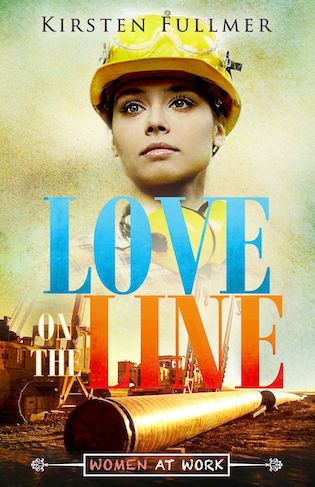
Love on the Line (+Giveaway)


* Love on the Line
* By Kirsten Fullmer
* (Women at Work #1)
* Publication date: June 14th, 2017
* Genres: Coming of Age, New Adult, Romance, Young Adult
Andrea is an ordinary girl in an extraordinary situation.
She left her comfortable home and family to take a job building a pipeline with her estranged grandpa, Buck. She’s curious about his job, and why her mother dislikes the man. She didn’t expect to uncover buried family secrets, or for the job to be so difficult.
Rooster isn’t a bad guy. He respects women; he was raised by one of the best. But that new girl on the job is too small and feminine. She’s a distraction, plain and simple, and she doesn’t belong on a pipeline. This job is his chance to impress Buck Brennan, a pipeline legend, and no girly greenhorn is going to ruin it for him.
Will Andrea prove herself to her grandfather and forge a relationship with the old man, or will continuous disagreements and unexpected sexual tension between Andrea and Rooster derail their hard work?

 Now here is an excerpt for your reading pleasure.

Without another word, Rooster led Andy away. He did take time however, to catch Nick’s eye, motioning down toward Andy with his head to indicate he would walk her home.
Nick nodded back.
Andy wobbled on her feet, so Rooster slipped his arm around her waist to keep her from tripping. Once they were out of hearing range, he held her at arm’s length, inspecting her face in the dim glow of the street light. “You okay?” he asked, his expression speculative. “You’re not gonna hurl, are you?”
          She mumbled and tried to push away.
          He kept hold of her, certain she’d topple to the ground if he let her go, and pointed her back toward the lane through the park.
          Finally accepting his arm around her, Andy staggered unevenly at his side, muttering under her breath about apples and pint jars.
          Three trailers down she tripped on a rut, nearly falling headlong into the road. Rooster grabbed her, wrestling her back to an upright position. They stood facing each other, with Andy swaying from side to side.
Rooster shook his head and moved his hands to circle her waist, to steady her.
She blinked up at him, looking beautiful, but so very drunk. “You’re gonna be sick as hell in the morning,” he murmured, unable to ignore the feel of her under his hands.
“I don’t feel so great now,” she slurred, trying in vain to focus on his face. “Where are we?” She flung her head from one side to the other, causing Rooster to tighten his grip in order to keep her upright.
“I’m walking you home.”
“Well.” She pointed back toward the party. “I live back there.”
“Why didn’t you say—never mind.” He turned her around to face back the way they’d come.
Andy’s feet dragged like a rag doll, and she giggled to herself. Feeling no pain, she broke into a rendition of Twinkle, Twinkle Little Star, pronouncing the lyrics as ‘Trinkle, Trinkle.’
Rooster chuckled in spite of himself, working to keep her moving. “Come on, one foot at a time.”
She stopped abruptly, and her head kinked back as she gawked up at Rooster. “Why are we walking together?”
Taken aback at her ridiculous question, he wondered the same thing. “You need to get home.”
She regarded him; her head tipped to one side.
Fireflies winked behind her in the darkness. He waited.
Finally, her expression cleared. “You’re handsome, you know that?”
He didn’t reply, just took in her solemn expression. What was it they said, you were more honest when you were drunk, or was it…?
“No, I mean it,” she reiterated, flailing one hand. “I’ve always thought so.”
With a grin, he pointed her back down the drive. “Well, thank you. You’re very pretty as well.”
“Yeah.” She shrugged, being agreeable.
Amused at her shifting moods he tightened his arm around her waist. The girl was warm and soft and, to his chagrin, humming again. She hiccupped loudly, and he sighed. He needed to get her home. “Which trailer is yours?”
Andy ground to a halt and flung her head to the left, then to the right, causing Rooster to tighten his grip once again.
“They all kinda look the same.”
He sighed. “Are you sure your trailer is by Nick’s?”
Her attention returned to Rooster. “I don’t know where Nick lives.”
He shook his head in exasperation. Holding her by one arm, he watched her with concern, wondering how he’d figure out where she lived. Reaching up with his free hand, he readjusted his ball cap. This wasn’t going well.
                                      ***
The pancake flipped twice in the air then landed back in the frying pan. Rooster settled the pan back on the burner and turned to his friend. “I’m just sayin’, you should have watched her closer. She’s never had moonshine before.”
Nick moaned and placed his elbow on Rooster’s table, then gingerly lowered his forehead into his palm. “Why you gotta be like that? Don’t I feel bad enough today?”
Rooster glared at the pan as he checked the pancake. “I’m sure Andy feels even worse.” And a drunk woman on her own is always at risk, he added to himself. In truth, she was in no danger with the crew, but still.
Raising his coffee cup for a long, slow slurp, Nick groaned. A rusty mew from under the table caused him to lean to one side and peer, red eyed, at the kitten batting his untied bootlaces under the table. With a sigh, he carefully placed his coffee mug back on the table and tossed his friend a dirty look. “Sounds like you were watching her most of the night. Why didn’t you step in?”
The pancake was done so Rooster slid it expertly onto a plate. “Not my party,” he stated flatly as he poured more batter in the pan. He moved to the table and put the plate in front of Nick. “Besides, you’re her friend.”
“Oh, and what are you?” Nick asked, lifting his blurry eyes to meet Rooster’s.
Rooster plopped a bottle of syrup onto the table, making Nick wince. “I’m the guy who had to drag her all over the park, trying to figure out what trailer to put her in!”
***
          Kneeling in her tiny bathroom, Andy dropped her head onto her arm circling the toilet seat and moaned. Not only did she feel like all holy hell, but she remembered bits and pieces of the evening before.
She thought she’d done okay at the party, but the fragmented memory of Rooster helping her home made her wince. Never again would she drink moonshine.
She lifted her head, then groaned and dropped it back to her arm. A hazy recollection of Rooster helping her up the trailer steps flashed in her memory. She recalled slipping to one knee, obliging him to grab her butt, a cheek in each hand, in order to heft her up into the trailer.
“Damn,” she lamented, feeling every inch the fool.


Author Bio:
Kirsten is a dreamer with an eye for art and design. She worked in the engineering field, taught college, and consulted free lance. Due to health problems, she retired in 2012 to travel with her husband. They live and work full time in a 40' travel trailer with their little dog Bingo. Besides writing romance novels, she enjoys selling art on Etsy and spoiling their three grandchildren.
As a writer, Kirsten's goal is to create strong female characters who face challenging, painful, and sometimes comical situations. She believes that the best way to deal with struggle, is through friendship and women helping women. She knows good stories are based on interesting and relatable characters.
For more on Kirsten and her writing, contact with her on the following sites: 

Thanks so much for stopping by today. Do you enjoy stories where the female protagonist is put in situations that women aren't normally associated with such as pipeline workers?

XBTBanner1

Tuesday, March 31, 2020

Treasure of the Blue Whale by Steven Mayfield


It’s a pleasure to tell you about a new-to-me author I recently was introduced to and his upcoming release, TREASURE OF THE BLUE WHALE.

* Treasure of the Blue Whale
* By Steven Mayfield
* Publication Date: April 1st, 2020
* Genres: Fiction, Coming of Age, Humor

In this whimsical, often funny, Depression-era tale, young Connor O’Halloran decides to share a treasure he’s discovered on an isolated stretch of Northern California beach.

Almost overnight, his sleepy seaside village is comically transformed into a bastion of consumerism, home to a commode with a jeweled seat cover, a pair of genuinely fake rare documents, a mail-order bride, and an organ-grinder’s monkey named Mr. Sprinkles. But when it turns out that the treasure is not real, Connor must conspire with Miss Lizzie Fryberg and a handful of town leaders he’s dubbed The Ambergrisians to save their friends and neighbors from financial ruin.

Along the way, he discovers other treasures in the sometimes languid, sometimes exciting days of that long-ago season. He is rich and then he isn’t. He learns to sail a boat and about sex. He meets a real actor. He sneaks into villainous Cyrus Dinkle’s house and steals his letter opener. He almost goes to jail. He loves Fiona Littleleaf. He finds a father. And best of all, he and little brother, Alex, reclaim their mother from the darkness of mental illness.

TREASURE OF THE BLUE WHALE is available at the following sites: Amazon, Goodreads, and Regal House Publishing.

Advanced praise for this tantalizing story.

“Steven Mayfield's Treasure of the Blue Whale is a fascinating and wildly inventive narrative that artfully weaves the timeless themes of greed, survival, and love into an epic American tale that grips the reader from start to finish. This story is told through the lens of a talented and empathetic writer whom I've long admired for his ability to observe and to make sense of our complicated world and the individuals who make a community. This is the novel I've been waiting for, and it does not disappoint.”—Thanh Tan, Two-time Emmy Award-winning journalist and multimedia storyteller.

“Treasure of the Blue Whale is a mystifying tale capable of accomplishing what the great American novels often do. It fosters conversation and debate about who we are as people and what makes us tick, while entertaining to the very last page.” —Erick Mertz, author of The Book of Witness and The Lies & Truth of Doctor Desmond Brice

Now here’s an excerpt from TREASURE OF THE BLUE WHALE for your reading pleasure.

Every boy has a friend with an older brother happy to introduce an innocent younger sibling and his pals to pornography. Mine was Webb Garwood, whose brother Tuck had already initiated our education with a library of postcard photos depicting Rubenesque women and hairy men engaged in naked Greco-Roman wrestling. Thus, I believed myself to have more than a nodding acquaintance with what went on behind a bedroom door and was incensed with Fiona. My indignation might seem silly in today’s world, but I assert with some confidence that it is difficult to stumble across a bigger prude than a ten-year-old boy in 1934. Thus, I was profoundly ashamed of Fiona as well as frightened by the prospects a liaison with Everson Dexter had put in her future.  I knew sex resulted in babies, rejecting the claim of Judy Buford, my fourth-grade teacher, who had solemnly informed our class that childbirth was a result of marriage, prayer, and a good night’s sleep. “You pray very hard, and when you wake up, you’re pregnant,” Mrs. Buford told us. So, I hope it’s understandable that what I next said to Fiona was a product of my worldliness, when compared to Mrs. Buford, and the distress attending Fiona’s decision to become a fallen woman before I was old enough to fell her.
          “Now you’re gonna get pregnant!” I shouted.
          I ran off and went to the beach below the lighthouse, firing sand dollars into the surf until my arm ached. Then I sat on the damp sand, muttering curses I’d heard the men use at the Last Resort, all the while plotting various ways to make Fiona sorry she’d chosen Everson Dexter over me. The air was filled with the smell of the sea, and although it was a scent I usually found invigorating, it now seemed dank and rotten, redolent of brackish tide pools and decay. My mood, already sour, grew more bitter. And then, in the way of all spurned lovers, anger drifted into despondence, self-pity rolling over me like the low gentle waves curling relentlessly onto the beach, the thin rim of foam at their crests like the tears clinging to my eyelashes. I was heartbroken; indeed, it was my first broken heart.
          I had nearly worked up the courage to drown myself when James showed up.
          “Nice day,” he said, sitting next to me.
          “Leave me the heck alone, James,” I said. “I don’t want to talk about it.” He didn’t make me and we spent a couple of minutes in silence. Of course, I did want to talk about it, but when I at last chose to speak, my voice was little more than a whisper.
          “Is Fiona a whore now?” I asked him.
          James frowned. “You watch your tongue, young man,” he scolded, his tone making clear that there was only one adult on the beach and he’d be sure to let me know when there were two. “Fiona Littleleaf has been really good to you and your brother. She loves you and you love her. You don’t put names like the one you just used on someone you love.”
          I wrapped my arms around my knees and leaned forward, burying my face in the nest made by the crooks of my elbows.

Author Steven Mayfield
For those who aren’t familiar with the author, here’s a brief background on him.

Steven Mayfield is a past recipient of the Mari Sandoz Prize for fiction and the author of Howling at the Moon, a Best Books of 2010 selection by USA Book News.

He lives in Portland, Oregon with his wife and three spoiled mutts.

Thanks so much for stopping by today. What would you do if a treasure potentially worth millions washed ashore in your sleepy seaside town?

Monday, July 8, 2019

The Saturday Night Ghost Club


I hope everyone had a safe and happy Fourth of July holiday and is ready to find some new books to read. I’d delighted today to welcome acclaimed Canadian author Craig Davidson (horror pen name Nick Cutter) to Thoughts in Progress to talk about his new gripping, suspenseful novel, THE SATURDAY NIGHT GHOST CLUB.

A coming-of-age story set in Niagara Falls, in the vein of Stranger Things (season 3 premiered July 4), Craig’s novel is the perfect paranormal, 1980s fix for fans of the show.

Set in 1980s Niagara Falls—a seedy, but magical place surrounded by intrigue and lore—THE SATURDAY NIGHT GHOST CLUB centers around Jake Baker and his uncle Calvin, a kind, but eccentric enthusiast of occult artifacts and conspiracy theories. The summer Jake turns twelve, he befriends a pair of siblings new to town, and so Uncle C decides to initiate them all into the “Saturday Night Ghost Club.” As the summer goes on, what begins as a light-hearted project leads to uncovering dark secrets beyond their imagination. With complimentary narratives of Jake as a twelve-year-old and as a neurosurgeon adult, Craig explores an intricate dynamic between one’s childhood and adulthood not often written in literature.

At once a suspenseful, gothic story of hauntings real and imagined, and also a poignant portrait on how childhood experiences influence the adults we become. The genre-bending novel is more than meets the eye as Craig gradually unfurls a twist you will not expect. THE SATURDAY NIGHT GHOST CLUB is the type of book you will think about for weeks after reading—about its emotional weight, its unforgettable characters, and its complex themes interwoven in the narrative, such as the mutability of memory and the power of familial love.

Now join me in a conversation with Craig.

You’ve previously published four literary fiction books, including the short story collection Rust and Bone, which was adapted into a Golden Globe-nominated feature film, and penned bestselling horror novels under your pseudonym Nick Cutter. Already a prominent writer in Canadian fiction, THE SATURDAY NIGHT GHOST CLUB seems poised to be your big, breakout book in the U.S. Why do you think this novel will resonate with so many people? How did your previous books and your horror novels as Nick Cutter influence THE SATURDAY NIGHT GHOST CLUB?

Craig:
Well, it would be nice to break out, sure! I think this is probably the most, I guess you’d say, the most accessible book I’ve ever written? With my earlier work, well, those are the books of a young man, full of the things that some young men worry about, obsess over, aspire to—as a result, they were kinda violent, myopic in the way that twentysomethings can occasionally be, navel-gazing, all that. They were a true expression of how I felt at the time, for sure—all the things that vexed and bothered and energized me, they’re all on display. But they may’ve been narrowly focused for all that. The Cutter books … I’m really proud of those, but again, perhaps narrowly focused. They’re likely seen (fairly) as pretty extreme in some ways. They’re a product of the horror books I grew up reading; in addition to King and McCammon and Barker—who is himself a rough pill to swallow sometimes—I enjoyed David Schow, Joe Lansdale, Poppy Z Brite, Skipp and Spector; writers who had a real dangerous edge. So again, if your influences are those, and you set out to have your writing have those kinds of sharp teeth … well, likely it won’t be for everyone. But that’s not to say The Saturday Night Ghost Club is some sort of toothless pap. It’s just that it’s concerned, I suppose, with the things that now matter to me: being a parent, nostalgia and what it felt like to be a child, the mysteries innate to that time of one’s life. Maybe I’ve become an old softie, I don’t know.

THE SATURDAY NIGHT GHOST CLUB beautifully addresses sophisticated concepts of memory, trauma, family dynamics, and mental health, but it is also very accessible and includes fantastical elements that appeal to wide range of readers. How were you able to create a story that transcends both genre and generation and why was that important?

Craig:
I suppose to be honest it was a lot of luck! Most writers will likely tell you that they aren’t 100% sure where their ideas come from—although there’s often a hint of their own selves and history in their stories, as there is for me in this one—but ultimately I just find some characters who I want to follow, to invest myself in their fictional existences, and I guess to work through some element of life (my own, or just some ambient question that I’ve wanted to try to answer, in this case about the power and frailty of human memory) that I find fascinating. Where it goes from there, how successful it eventually is in capturing those characters or addressing that question … well, that’s one of the challenges and fears of writing a book. How close did I come to accomplishing my ambition, lofty though it may have been?

The mutability and fallibility of memory is a clear theme of THE SATURDAY NIGHT GHOST CLUB, which makes the protagonist Jake an unreliable narrator as he looks back on his summer as a twelve-year-old. Memory continues to be a thread throughout the narrative with adult Jake’s profession as a neurosurgeon and his eccentric Uncle Calvin’s severe brain trauma. How do you think readers will look back on Jake’s story after revealing himself to be an unreliable narrator? Why does the function of brains in relation to memories interest you?

Craig:
I think we’re all fairly unreliable narrators when it comes to chronicling our own lives, or even the lives of others. Some of that is pretty harmless—say, a person’s Instagram page presenting a narrative of that person that is more glamorous or wise or instructive than their lives most likely are; so, basically a curated presentation of one’s life—and some are probably more problematic. But I mean, I’ve curated my own memories over time. I remember things differently than they happened, I’m sure. I could talk to old friends about a given event from our childhood or even our twenties, and we all may remember it slightly (or vastly) differently. Why is that? Well, we evolve as people. The things we felt and believed at one point in our lives—and acted on those beliefs—may not prevail when we look back at those events years later. So we kind of … sanitize our past selves, I guess. Make our past selves measure up in some way to the people we believe ourselves to be now. Unless there’s definitive proof to dispute our memory, then I suppose it can hold up in the only place it really matters—our own minds. So however readers react to Jake, I suppose it may inform the way they think about their own memories, and how reliable they really are.

THE SATURDAY NIGHT GHOST CLUB introduces its central characters to the supernatural world. However, they come to learn that the real monsters, and ghosts that haunt us, are human. Through the scenes depicting human violence, you weave in stories of how far one will go to protect those they love. What were you trying to convey about the challenges of protecting someone from the world and themselves and, as a father yourself, particularly the desire for parents to protect their children?

Craig:
I think a lot of that comes from being a parent now. Someone wrote that being a parent opens up this new intensity of love—like, something that registers on a different tenor or timbre than romantic love, or love for a friend. I’m not sure that’s the case. It could be for some, that’s not for me to say. But I do feel that it unlocked a new level of fear. I feel fear that I never really dreamt was possible when I think of all the terrible things that could happen to my kid. A lot of it is stupid, daydream-y ridiculous things, shark attacks and bizarre unfeasible threats, but they feel real to me! But in the end, I won’t always be there to protect my son. I won’t be there when he needs me, not always, and anyway, he may not take any advice I have to offer. So a great deal of that kind of love—of all love, really—is helplessness. You’re helpless to make someone love you, and you’re helpless sometimes to help those you love so much.

In THE SATURDAY NIGHT GHOST CLUB, you alternate between scenes of twelve-year-old Jake and adult Jake’s perspective, which creates a fascinating juxtaposition between the experiences that shape us as children and who we become as adults. How do you write such complex children?

Craig:
I just came back from picking up our six-year-old from daycare, and it always amazes me the innocence of emotion and, I guess, need, on display. As adults, we withhold things, don’t say what we mean (or not quite), and sometimes fail to let other people know how we feel about them, good or bad. And that’s likely the way it needs to be to have a functioning adult society. But the kids in this novel (and in a way, Uncle Calvin, who exists in somewhat of a permanent, willfully childlike state) are in that middle zone: old enough to know you can’t just blurt out your feelings like you did when you were five, but not yet cynical or wounded that they might chastise themselves for feeling things as deeply as they do. So, to be honest, I think any ability I may have on the front is really a “feel” kind of thing; you try different ideas and different thoughts out, as presented through your younger characters—and if they feel accurate, representative of how you yourself may have felt at that age, then you go with them.

Niagara Falls is not only the perfect setting for a ghost story given its surrounding lore, such as the “Maid of the Mist,” but it is also your hometown. As someone who grew up in Cataract City, how much of the book is inspired by your own childhood? Why was it an important setting for the narrative?

Craig:
Author Craig Davidson/Photo Credit Kevin Kelly
A great deal, yes. A huge amount. The Niagara Falls of the book is more the Niagara Falls of my childhood and teenage hood: the taffy stands, the cheap tourist junk shops, the cheesy haunted houses and wax museums. Clifton Hill’s really corporate now! They’ve got Starbucks and IHOPs on the strip now. All the mom and pop places are kinda gone. So again, it’s that feeling of going back, for me. The more I write, the older I get, the more I inevitably seem to retreat to those times and places and people in my past. It’s not that I don’t love my life now. I do. I’m so lucky, so grateful for it. But the world now has a complexity and threat that unnerves me sometimes. You’ve got people in positions of great power who don’t seem like they belong there, aren’t doing the right things, and vast swathes of people who support them anyway. So maybe I just skedaddle back into the past as a mental health measure!

From Stranger Things to GLOW to The Americans, eighties nostalgia has become increasingly prevalent in media and pop culture over the last five years. Why do you think that decade is captivating viewers and readers right now? Why did you choose it as the time period for THE SATURDAY NIGHT GHOST CLUB?

Craig:
Yes, well, the simplest answer is: I grew up and came of age in the 80s. I basically thought, what year was it when I was Jake’s age? 1988. So I tried to put myself there, at the tail end of the 80s, and write from that perspective. I would guess the popularity may be due to simple nostalgia value, plus the fact that a lot of creative people from that generation are now in their thirties and forties, and are writing books and TV shows and films, and that’s the time-frame they gravitate to for the same reasons I do. The 80s feel like such a lightweight, untroubled decade now. The Amblin decade, right? The nineties, everyone became Wall Streeters. So it feels like the right decade to tell stories for some of us who grew up at the time, and it’s perhaps an embraceable decade for those who didn’t.

Craig, thanks for sharing this insight into your story. Knowing background of a story always adds more depth for me.

For those who aren’t familiar with Craig, here’s a bit of background on him.

Craig Davidson has published four previous books of literary fiction: Rust and Bone, which was made into a Golden Globe-nominated feature film, The FighterSarah Court, and the Scotiabank Giller Prize-nominated Cataract City. Davidson is a graduate of the Iowa Writers’ Workshop, and his articles and journalism have been published in Esquire, GQ, and The Washington Post, among other places. He lives in Toronto, Canada, with his partner and their child. He also publishes bestselling horror fiction under the pseudonym Nick Cutter.

Thanks everyone for stopping by today during Craig’s visit. What are your thoughts on humans sometimes being more monsters than anything the supernatural world can throw at us?